
In recent years, perspectives on Africa, and the ways in which the continent, its people, its cultures, and its history are represented in our country, have become increasingly topical.
This growing attention stems from a sense of unease: what is possible, what is acceptable, and what is necessary when it comes to Africa? It is often citizens of African descent who are now, with increasing impatience, pointing out the shortcomings and asking difficult questions, refusing to accept vague answers—or no answers at all. They seek both cultural and political change. Indeed, many find it incomprehensible that there are few, if any, references to Patrice Lumumba in our public spaces.
Yet the Africa Film Festival believes that change is possible. Who, in the 1980s, would have imagined that squares and streets named after Martin Luther King Jr. or Nelson Mandela would one day exist in Flanders? And yet they do. Can a new perspective on the past find a place in the present? The Royal Museum for Central Africa has also embraced change, driven by new historical insights and the growing presence of the African diaspora. Change is therefore possible, and this belief lies at the heart of the Africa Film Festival, even though we remain aware that such transformations are never straightforward.
The mission of the Africa Film Festival is to bring stories and images about Africa’s past and present into the public sphere: into cinemas, museums, cultural centres, schools, neighbourhoods, and the media. Africa is the continent closest to us, one with which we have inevitably been connected, both historically and today. It forms part of our culture, our history, and our daily lives.
Yet despite living in a society where information and images can travel almost without borders, meaningful stories about Africa are reaching the broader public less and less. Stereotypical views of Africa and the continued “dehumanisation” of its people remain stubbornly persistent. This issue forms the central theme of the conference Humanizing Art, Culture and Media.
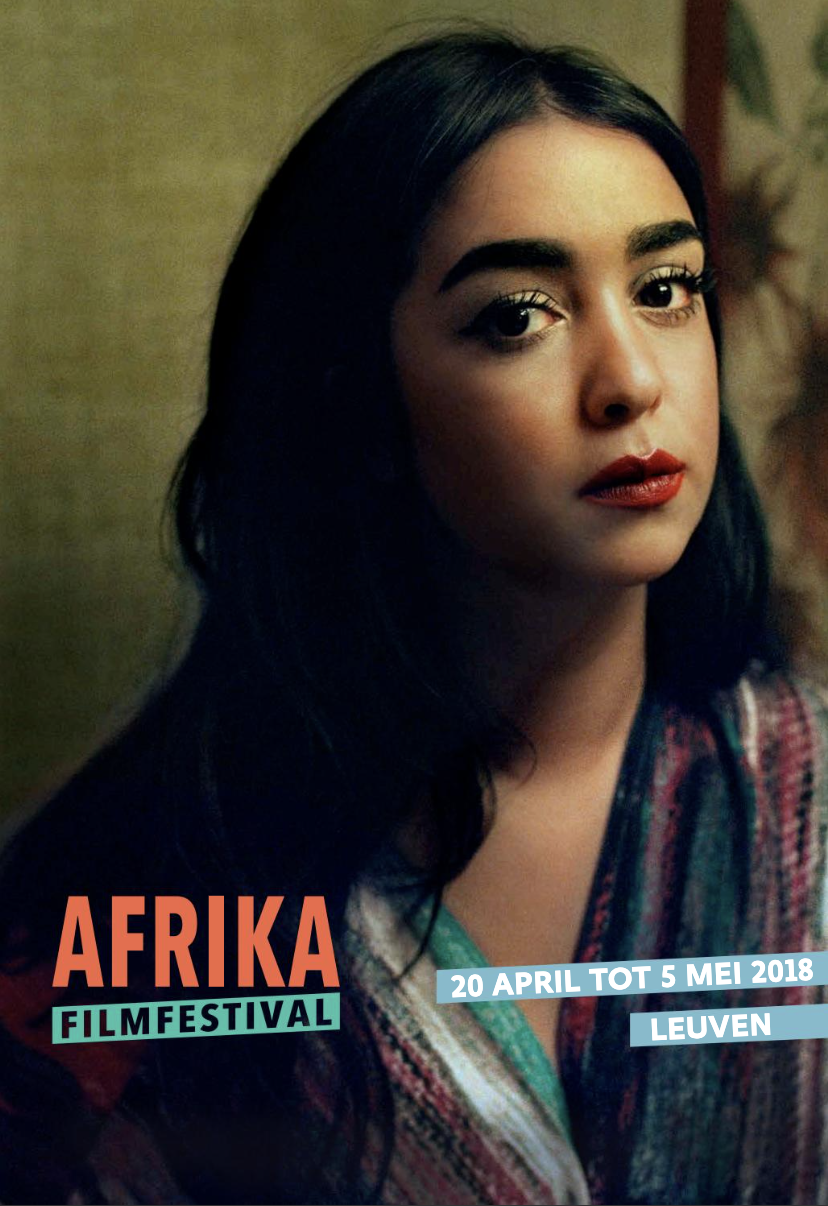
The poster for this 23rd edition features the young Tunisian actress Mariam Al Ferjani, known from Beauty and the Dogs (La Belle et la Meute), as a symbol of women who make their voices heard.
We Are Womanists is the festival’s central theme and runs throughout every aspect of the programme: films, lectures, slam poetry performances, workshops, and exhibitions. In addition, Tunisia is one of the countries receiving special attention this year.
For many years, the Africa Film Festival has closely followed South African cinema and could not let the centenary of Nelson Mandela’s birth pass without recognition. This forms part of the commemorative activities organised in Leuven around the end of the First World War, which this year take place under the theme Peace and Global Citizenship. A special film programme has therefore been curated at M – Museum Leuven, featuring distinguished guests, including South African activist and author Andrew Feinstein.
The festival opens with the latest French-Chadian film by Mahamat-Saleh Haroun, telling the story of an African father and his two children who are living as refugees in France. The father is portrayed by Eriq Ebouaney, who also appeared on the festival poster in 2017.
For the YAFMAs, sixteen short films have been selected, while five outstanding documentaries will compete for the Flemish UNESCO Commission Prize. These screenings will once again take place during the festival’s opening weekend at M – Museum Leuven. The winners will be announced on Friday, 4 May, during the special Film and Artists’ Awards Night at Kinepolis, where one or more award-winning films will also be screened.
Once again, the festival presents exhibitions in collaboration with Leuven’s photography club Foto Gamma, the libraries of Kessel-Lo and Heverlee, and the University Library. The debate evenings, accompanied by thought-provoking documentaries, will take place in the familiar setting of the ABVV Hall.
The Africa Film Festival has already come a long way, but it remains aware that it can only remain relevant if it continues to address new challenges with a contemporary perspective and keeps its finger on the pulse of cultural developments in both the Global North and South.
This means working in depth, generating new insights, strengthening cooperation with African cultural actors both on the continent and in Belgium, and reaching the broadest and most diverse audience possible. For this reason, partnerships with local, regional, national, and international initiatives are a natural and essential part of the Africa Film Festival’s mission and activities.