The 29th Edition: Exploring Identities
A Vibrant Programme for Everyone
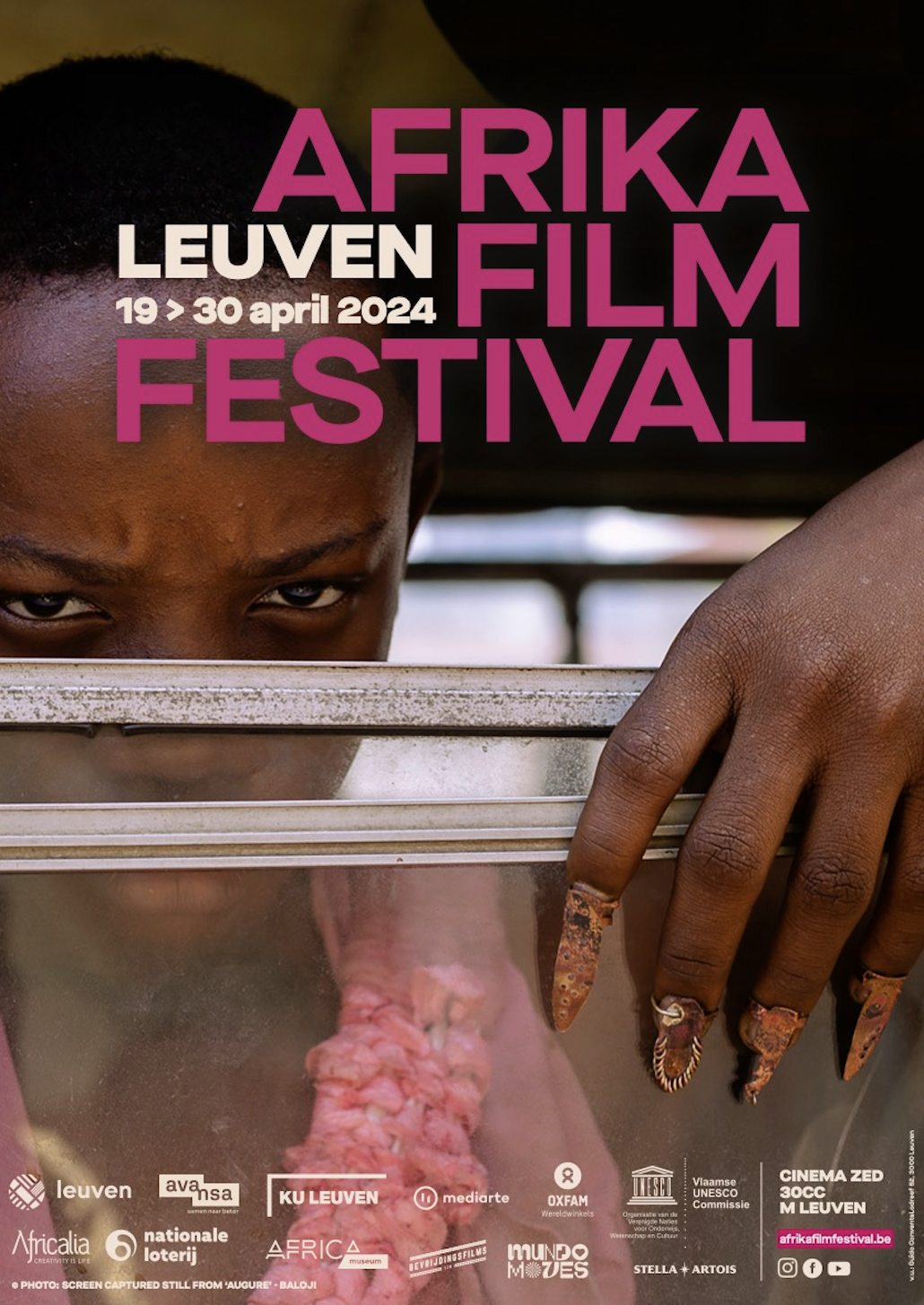
This year marks a historic moment in Belgian film history. For the first time, Belgium’s submission for the Academy Awards was a film by a Belgian-Congolese director: none other than Ghent-based Baloji Tshiani with his film Augure (Omen). The film had previously been selected for the Cannes Film Festival, where it won the prestigious New Voices Award. Augure naturally forms part of this edition, which revolves around the theme Exploring Identities. Living between two cultures, Baloji’s work strongly reflects questions of identity. Through this lens, AFF seeks to further explore how Afro-filmmakers navigate this duality and search for their place in society.
The need to engage in the debate around identity is more urgent today than ever before. In our increasingly diverse society, where people from many different cultural backgrounds live together, it is crucial to discuss the representation and presence of Africans in film, language, art, media, and public life as a whole. The controversy surrounding Baloji’s repeated rejections for film funding from the Flemish Audiovisual Fund (VAF) is a telling example.
With this 29th edition, through the theme Exploring Identities, we aim to draw particular attention to the importance of the Africa Film Festival and to the significance of representing a diversity of identities.
When the festival was founded in 1996, African filmmakers—particularly those living in Europe—predicted that questions of identity would become increasingly important as more Afropeans took up the camera. Through their work, they sought greater visibility within the local audiovisual landscape and aimed to ensure that their stories became part of the local cultural sphere, something essential for social cohesion and democracy.
AFF was founded in response to the lack of African stories in our media landscape. While some progress has been made since then, the situation remains fragile. It seems absurd that this is still a struggle today, yet the loss of funding from the VAF demonstrates that the battle is far from over. The disappearance of this structural support leaves us facing an uncertain future.
Nevertheless, we refuse to stand still. To make this year’s essential and valuable activities possible, we launched a crowdfunding campaign that will conclude on the festival’s opening day, 19 April. The support we have received over the past months not only confirms the value and relevance of this festival, but also highlights the important social role that the Africa Film Festival plays within our society. We would therefore like to express our sincere gratitude to everyone who has supported us in any way, as well as to institutions and organisations such as the City of Leuven, Africalia, KU Leuven, the AfricaMuseum, and the Flemish UNESCO Commission for their trust and support. You are the fertile ground that makes this festival possible.
Despite these challenges, AFF remains as determined as ever. This year, more than ever before, we are committed to providing a platform for Afro talent, both from Belgium and from across the African continent, amplifying their voices and sharing their creativity with a broad audience. In doing so, we hope to continue promoting African and Afropean cinema in Belgium for many years to come. We are therefore immensely proud of the programme we are presenting this year, which builds upon the sustainable development and long-term vision that our festival pursues.
AFF has always closely followed the Afro-Belgian film scene, supporting directors, actors, and actresses by not only programming their work but, in some cases, actively helping them. In 2022, we organised a Belgian short film competition and a workshop for the first time, creating a space where these young and diverse filmmakers could meet and exchange ideas. This year once again, audiences can discover these remarkable and powerful films through the Belgian Shorts competition. Their stories often revolve around questions of identity, approached from both shared and radically different perspectives. The socio-cultural and political influences experienced, directly or indirectly, by filmmakers from Congo or Rwanda differ from those affecting filmmakers from Ghana, Nigeria, or Morocco, particularly when they live in Belgium. This complexity forms part of the broader cultural landscape in which we live here in Leuven, Flanders, Belgium, and Europe. It also contributes to the humanisation of our media environment, enriching our culture and helping viewers become global citizens. To place these discussions in a broader context, AFF looks beyond cinema alone and embraces other art forms as well, from dance, illustration, and literature to fashion and music.
Alongside its focus on Afropean filmmakers, AFF continues to highlight recent productions from Africa and by African directors. We consider this focus essential in helping to decolonise our view of the world. These films not only provide insight into the richness and complexity of African cultures and societies, but also contribute to a deeper understanding of the continent, its people, and above all, its creativity. At Cinema ZED, AFF presents the latest films that have already made a strong impact at major international film festivals and deserve a place in any arthouse programme, yet most have not yet found their way into the Belgian film landscape.
Complementing the Belgian Shorts competition and our focus on African feature films, this year marks the 10th edition of the award for Best African Short Film: the Guido Huysmans Young African Filmmaker Awards, better known as the YAFMAs. The selected films are spread across four programmes, and one conclusion is unavoidable: the quality of the submissions continues to improve significantly year after year. In most cases, these screenings are Belgian premieres. Once again, they will be shown at M Leuven, alongside the documentary films that will be evaluated by a jury from the Flemish UNESCO Commission.
Exceptionally, this year we are also organising a commemorative day marking the 30th anniversary of the 1994 Genocide against the Tutsi in Rwanda. On this occasion, we will screen films that present Rwandan perspectives on these events and engage in conversations with Rwandan filmmakers about the role that art can play in processes of remembrance and healing. The aim is not to relive the tragedy, nor is the event politically motivated. Rather, it seeks to celebrate Rwandan culture and resilience. Our Rwandan guests will also take part in the traditional Congo-Rwanda Day.
For the first time, AFF opens with a Nigerian film: Mami Wata, which explores an African reality in which traditional religion is being challenged, affecting the culture and harmony of a village. In many ways, it serves as an allegory for a contemporary continent in transition. Last May, the Flemish press reported that Augure was the only Belgian film selected for Cannes, despite the fact that Mambar Pierrette by Rosine Mbakam had also been selected for the Directors’ Fortnight. Rosine has been a valued presence at the festival since 2009, and with her film about a strong and resilient Cameroonian woman, we bring this edition to a close.
Between these two powerful films lies an entire world of images, encounters, and inspiring activities that clearly demonstrate why an Africa Film Festival is more necessary today than ever before.